國家高速網路與計算中心
Open AI Pathology Analysis Platform with Integrative Collaboration
For years, liver cancer has been one of the top two causes of cancer-related deaths in Taiwan. Last year, around 8,000 Taiwanese died of liver cancer. Thus, National Cheng Kung University Department of Electrical Engineering Professor Pau-Choo Chung and her team partnered with the National Center for High-performance Computing (NCHC) as well as with physicians from various hospitals such as National Cheng Kung University Hospital, Kaohsiung Chang Gung Memorial Hospital, and Taichung Veterans General Hospital to address this issue. Together, they developed a digital pathology AI analysis model that analyzes digital pathology images of tissues in the human body to detect areas of change. The model calculates quantitative indicators related to disease diagnosis, which assists physicians in their diagnoses by providing objective pathological analysis results. The team has currently developed models for liver tumor detection, liver fibrosis AI analysis, and liver fat droplet AI analysis. Several research findings on digital AI pathology have been published in international journals and presented at conferences. The team aims to apply AI technology to assist in the analysis of liver diseases, particularly in the quantitative analysis of hepatitis and liver cancer. This application is expected to contribute to the efficiency of diagnosing and treating liver diseases.
In addition, the team has integrated the research findings of digital AI pathology to establish the ALOVAS Digital Pathology Cloud Analysis Platform on NCHC’s cloud space. This platform provides physicians with a convenient all-in-one digital pathology image analysis integration service by integrating digital pathology image analysis, annotation, pathology AI model training, and AI pathology. Subsequently, the platform's functionalities were jointly expanded by the AI Capstone Project, which was led by former National Cheng Kung University President Hui-Chen Su, and the clinical trials of current National Cheng Kung University President and former National Cheng Kung University Hospital Superintendent Meng-Ru Shen. They are also developing the world’s first Federated Learning Agent (FLAg) training mechanism. This mechanism, which is being interfaced with the National Institutes of Health (NIH) system in the United States, is the NIH’s first international partner in pathology image analysis.
The team would like to thank NCHC for providing extensive computational resources, storage space, and bandwidth for the ALOVAS platform. This support has enabled the rapid storage and analysis of pathology images and the efficient training of pathology AI models. Moreover, given that ALOVAS deals with sensitive medical images, NCHC has prevented information from being compromised or stolen by providing comprehensive cybersecurity for the entire system. In instances where the platform's operational performance falls short of expectations, experts at NCHC provide technical advice to adjust and optimize the computational environment to provide the best results.
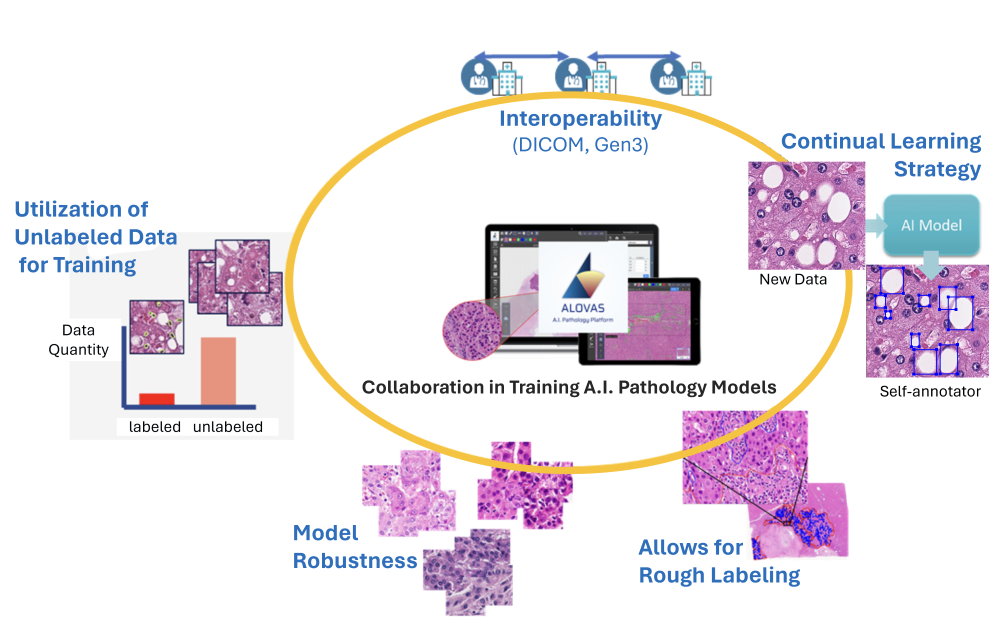
▲ Through the ALOVAS platform, smooth communication with physicians is beneficial for the development of excellent AI models.
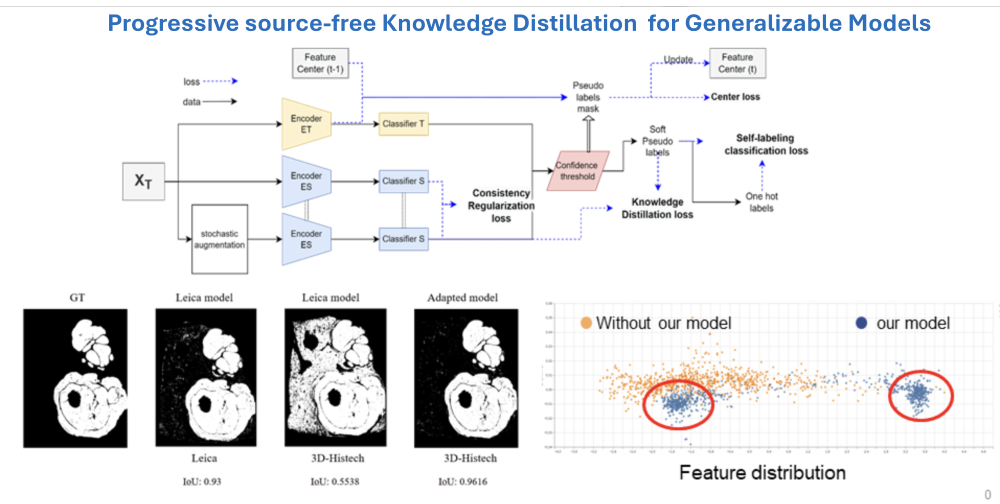
▲The pathological AI model developed by Professor Pau-Choo Chung's team demonstrates enhanced stability in analyzing pathological slides from various medical institutions.

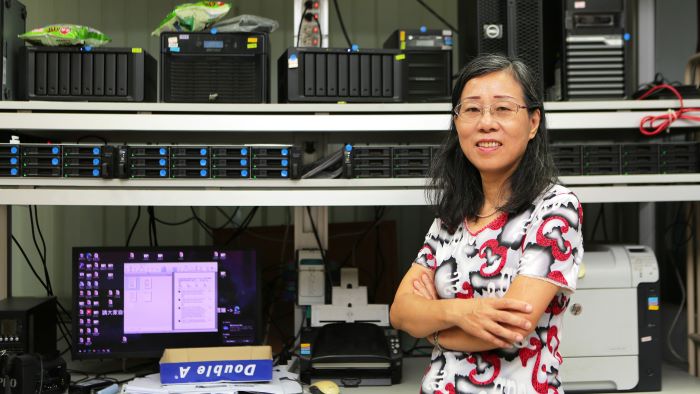
▲Professor Pau-Choo Chung's laboratory team collaborated closely and achieved remarkable results in the field of healthcare.