國家高速網路與計算中心
National Center for High-performance Computing Join Hands with Academic and Research Circles to Promote Forward-looking R&D with High-speed Computing
▲National Center for High-performance Computing invited scholars from different academic and research fields in Taiwan to participate in the "2022 From Enabler to Enhancer National Center for High-performance Computing Symposium."
In response to the advent of high-speed computing era, National Center for High-performance Computing of National Applied Research Laboratories held the "2022 From Enabler to Enhancer National Center for High-performance Computing Symposium" on June 28. Hahn-Ming Lee, Advisory Committee of National Security Council, Faa-Jeng Lin, Chairperson of National Applied Research Laboratories, Jenq-neng Hwang, Professor of University of Washington, Yu-ting Wu, Associate Professor from Department of Engineering Science, National Cheng Kung University, Jong-Shinn Wu, Director General of National Space Organization, and Chau-Lyan Chang, Director General of National Center for High-performance Computing, served as Symposium speakers, looked forward to the future of high-speed computing, and communicated with more than 100 scholars in Taiwan through live stream. National Center for High-performance Computing hoped to let the audience know more about the basic research facilities and services of high-speed computing through the symposium and create more opportunities for research collaboration.

▲The Symposium invited (from the left) Jong-Shinn Wu, Director General of National Space Organization, Chau-Lyan Chang, Director General of National Center for High-performance Computing, Faa-Jeng Lin, Chairperson of National Applied Research Laboratories, Jenq-neng Hwang, Professor of University of Washington, and Yu-ting Wu, Associate Professor from Department of Engineering Science, National Cheng Kung University. Meanwhile, Hahn-Ming Lee, Advisory Committee of National Security Council participated online, and Marine Chang, Chief Content Officer of Scientific American served as the moderator.
High-speed computing turned to the cloud to consolidate smart and resilient national development
Hahn-Ming Lee, Advisory Committee of National Security Council, said that high-speed computers are widely used, which also act as an important infrastructure to promote a smart and resilient Taiwan besides being used for academic research. Cloud-based high-speed computing services have become a global trend. Especially in recent years, affected by the COVID-19 pandemic and Russo-Ukrainian War, how to enhance the digital resilience of government operations is an important issue in the world. National Center for High-performance Computing has perfect high-speed computing infrastructure resources and network service energy. It is expected that National Center for High-performance Computing could conform to international service level agreements (SLAs) in the future and shoulder the important backup for the development of national digital resilience.
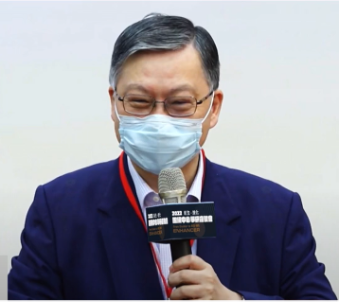
▲Hahn-Ming Lee, Advisory Committee of National Security Council, expected that the cloud-based high-speed computing service would become an important national backup for the future trend of National Center for High-performance Computing.
National Applied Research Laboratories served as a bridge between industry and university to promote forward-looking research
Faa-Jeng Lin, Chairperson of National Applied Research Laboratories, said that National Applied Research Laboratories is the largest legal entity under National Science and Technology Council. Since taking office, he had been thinking about how to enhance the elasticity, toughness, initiative, and enthusiasm that National Applied Research Laboratories should possess as a legal person. National Applied Research Laboratories is the provider of an R&D platform in Taiwan. It supports academic research, promotes forward-looking science and technology, and cultivates scientific and technological talents, which is also a bridge between university and industry circles. Taking National Center for High-performance Computing as an example, there are many outstanding R&D talents besides the high-speed computing big data platform and high-speed computing facilities. In the future, more innovative and prospective research directions would be further put forward for major scientific and technological issues, such as big data, virtual reality, and information security.
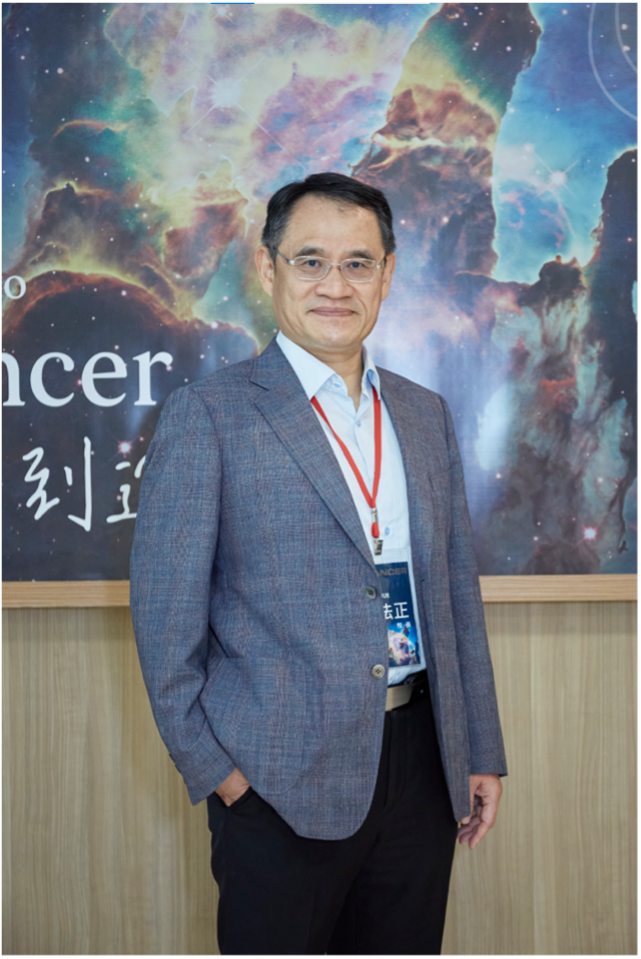
▲Faa-Jeng Lin, Chairperson of National Applied Research Laboratories, said at the Symposium that National Applied Research Laboratories has been serving as a platform for scientific and technological talents and innovative R&D since its establishment 20 years ago, which is also a bridge between university and industry.
Research energy was released together with academic and research circles to assist industrial innovation and R&D
Chau-Lyan Chang, Director General of National Center for High-performance Computing, with his own experience of serving NASA for more than 30 years, hoped that National Center for High-performance Computing could take on the heavy responsibility of national R&D like National Aeronautics and Space Administration (NASA), help enterprises solve problems, and cooperate with the academic circles to develop the technology available in the industry. There are mainly small and medium-sized enterprises in Taiwan with limited R&D resources, which highlights the importance of National Center for High-performance Computing. At the same time, the network resilience development proposed by Hahn-Ming Lee should be echoed, which is also one of the key research projects of National Center for High-performance Computing.
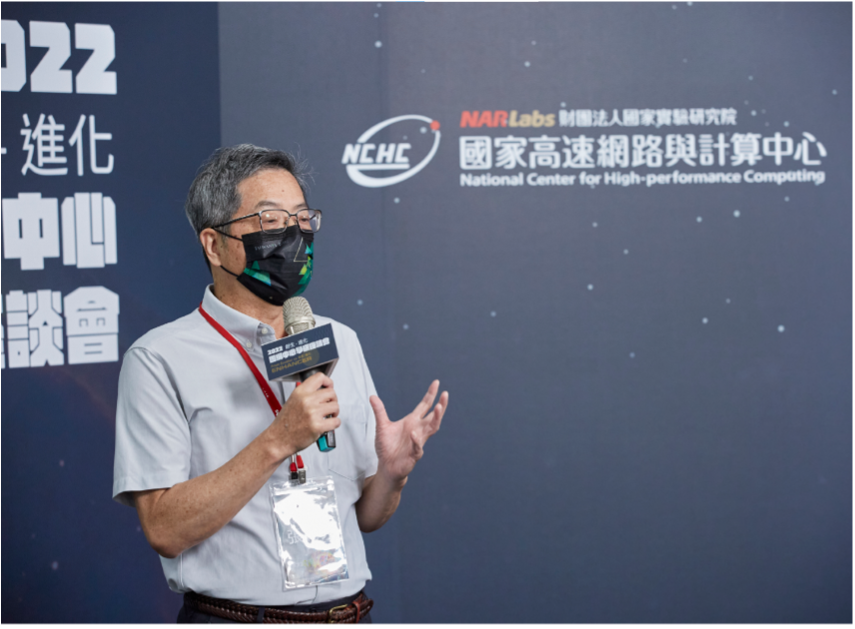
▲Chau-Lyan Chang, Director General of National Center for High-performance Computing brought the experience of working in National Aeronautics and Space Administration (NASA) for 30 years into the future development of National Center for High-performance Computing.
National Space Organization would cooperate closely with National Center for High-performance Computing in technology R&D
The year 2022 is the first year of space in Taiwan. Jong-Shinn Wu, Director General of National Space Organization, explained that simulation plays a very important role in space science and technology, such as how to design the launch site, how to sprinkle water, and how to enter the atmosphere after takeoff and finally into orbit. A lot of aerodynamic simulation and parallel calculation are required during the process. The success of rocket design lies in finding optimization through a lot of calculations. In the future, National Space Organization would be transformed into an administrative legal person. Jong-Shinn Wu said: "Transformation is not separation, and I think that the cooperation with National Center for High-performance Computing will be closer in the future." With the support of the high-speed computing resources of National Center for High-performance Computing, the vision of Taiwan's self-developed rocket flying into space would soon be realized.
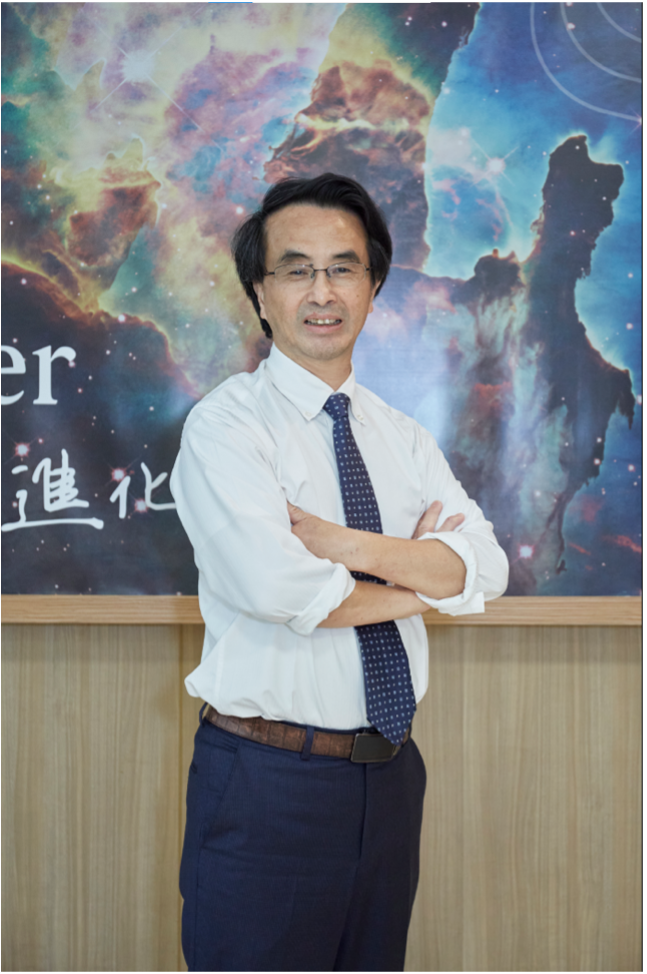
▲Jong-Shinn Wu, Director General of National Space Organization, said that during the rocket launch, a lot of high-speed calculations are needed in time, space, and energy to find the optimal design.
AI big data analysis services were provided to accelerate decision-making and innovation
Jenq-neng Hwang had served as a faculty member at University of Washington for 33 years and had been engaged in artificial intelligence (AI) research in the United States for a long time. He noted that it is very happy to do research in Taiwan for it provides high-speed computing resources, while in the United States, use is only available by paying to companies such as Amazon, AWS, Microsoft, Azure, and Google Vertex AI. In Taiwan, National Center for High-performance Computing can provide High-Performance Computing (HPC) service through the cloud. He also suggested that National Center for High-performance Computing may combine AI technology with big data, release AI software resources, and help enterprises in Taiwan to develop their technology. The AI big data service provided may even be used as an important reference for national policy development.
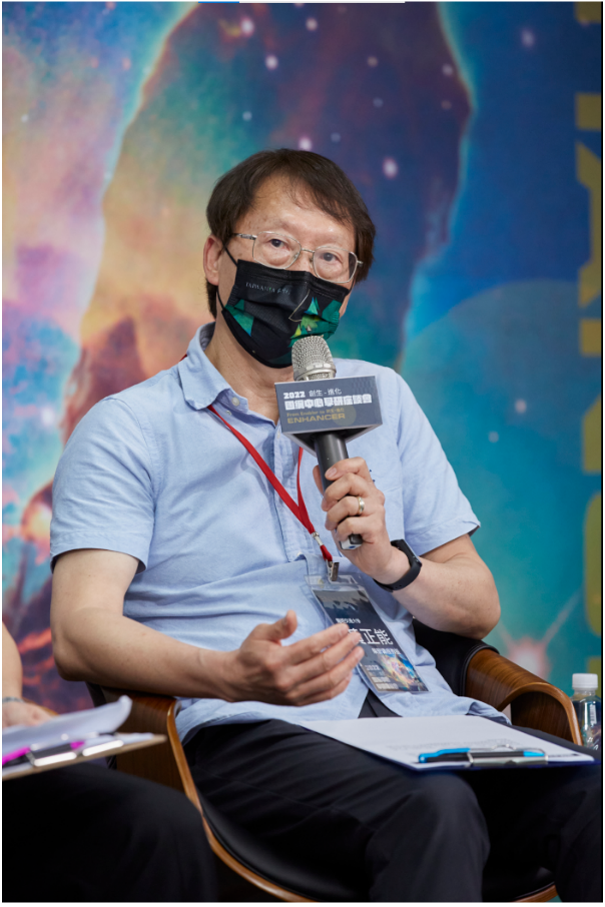
▲Jenq-neng Hwang, Professor at University of Washington, shared the cloud computing service provided by his laboratory for ocean-going fishing boats to help collect a large amount of marine information, and Taiwan is surrounded by the sea, with a large amount of marine information as a national resource.
The efficiency of green electricity deployment was improved to move towards net zero emission
A supercomputer is an important application field in energy forecast. Faa-Jeng Lin, Chairperson of National Applied Research Laboratories, explained that Taipower continues to promote the smart grid. It was estimated that six million low-voltage smart meters would be deployed by 2026. How to deploy them to help Taipower effectively achieve demand management and demand response control depends on supercomputer calculation. In addition, the high penetration rate of green energy is also an important issue to achieve net zero emissions. How to maintain the Taiwanese power system's high quality under the high penetration rate of renewable energy is a common problem faced by net zero emission. Yu-ting Wu, Associate Professor from Department of Engineering Science, National Cheng Kung University, put forward an example that high-speed calculation could help to estimate the future power supply which could be provided as the basis for power regulation of Taipower. This will be substantially helpful to people's livelihood.
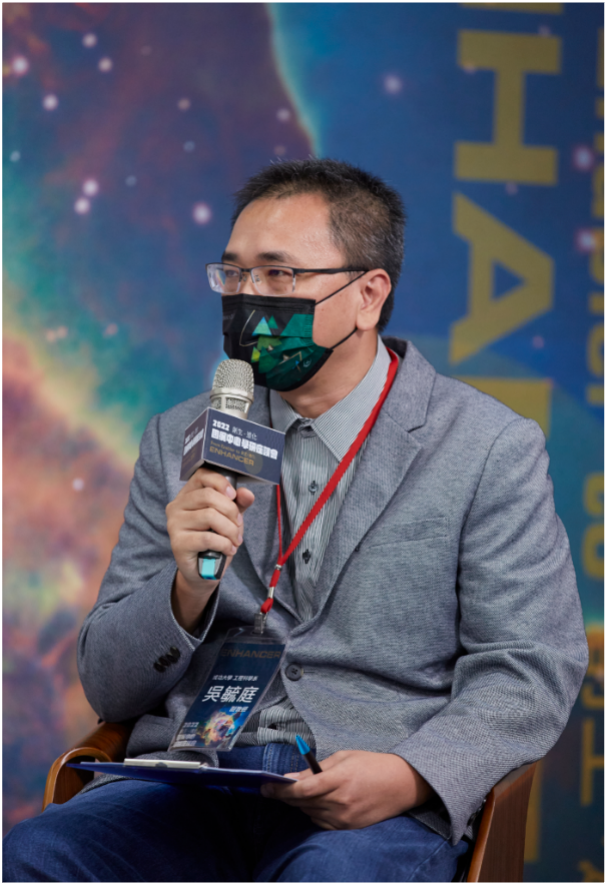
▲Yu-ting Wu, Associate Professor from Department of Engineering Science, National Cheng Kung University, started to use Taiwania 1. Through the high-speed computing of supercomputers, the computing time of experiments could be greatly reduced.
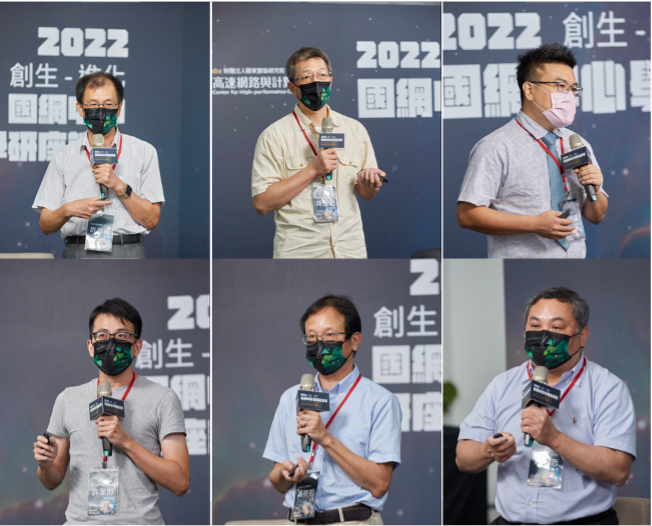
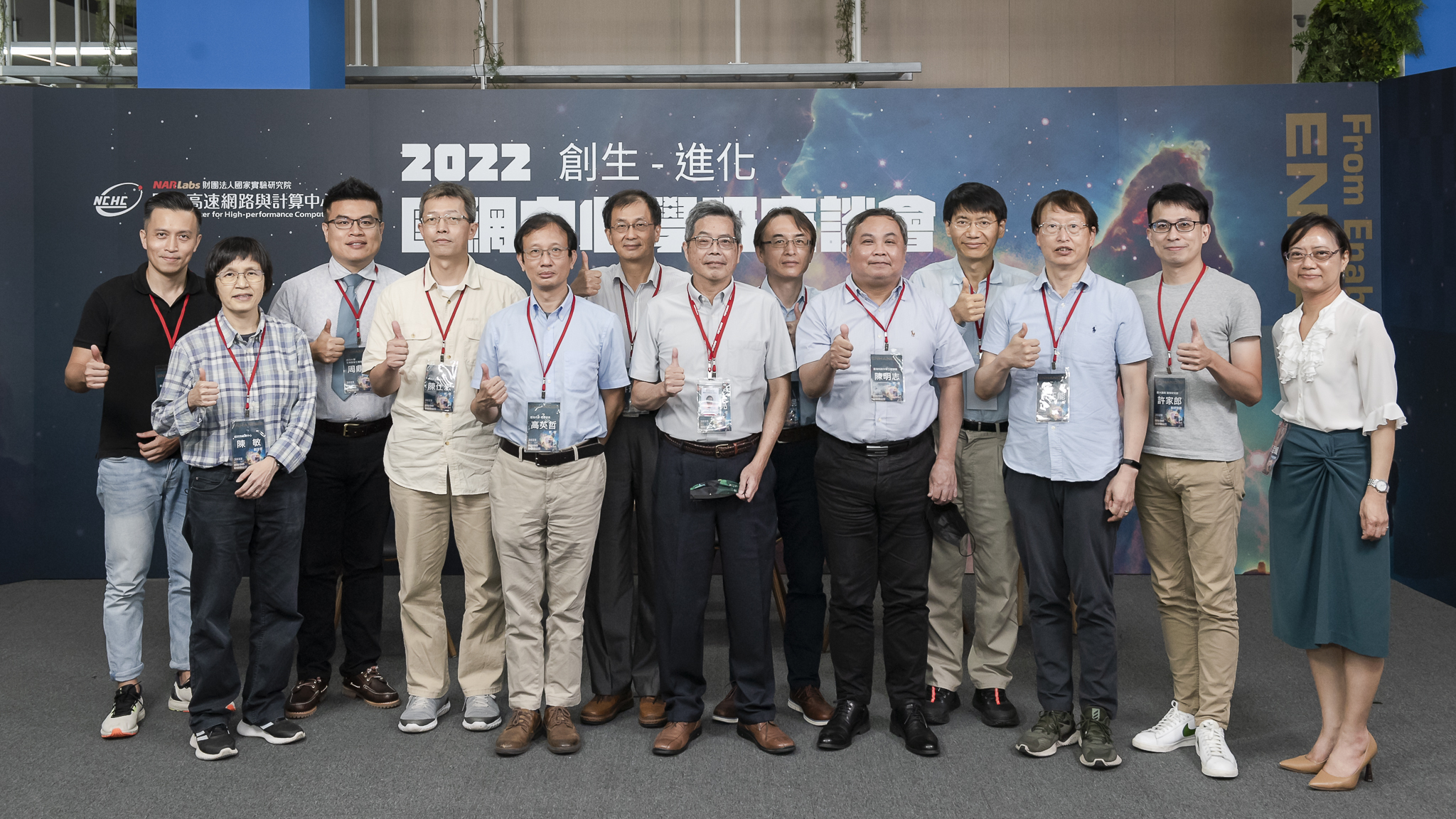
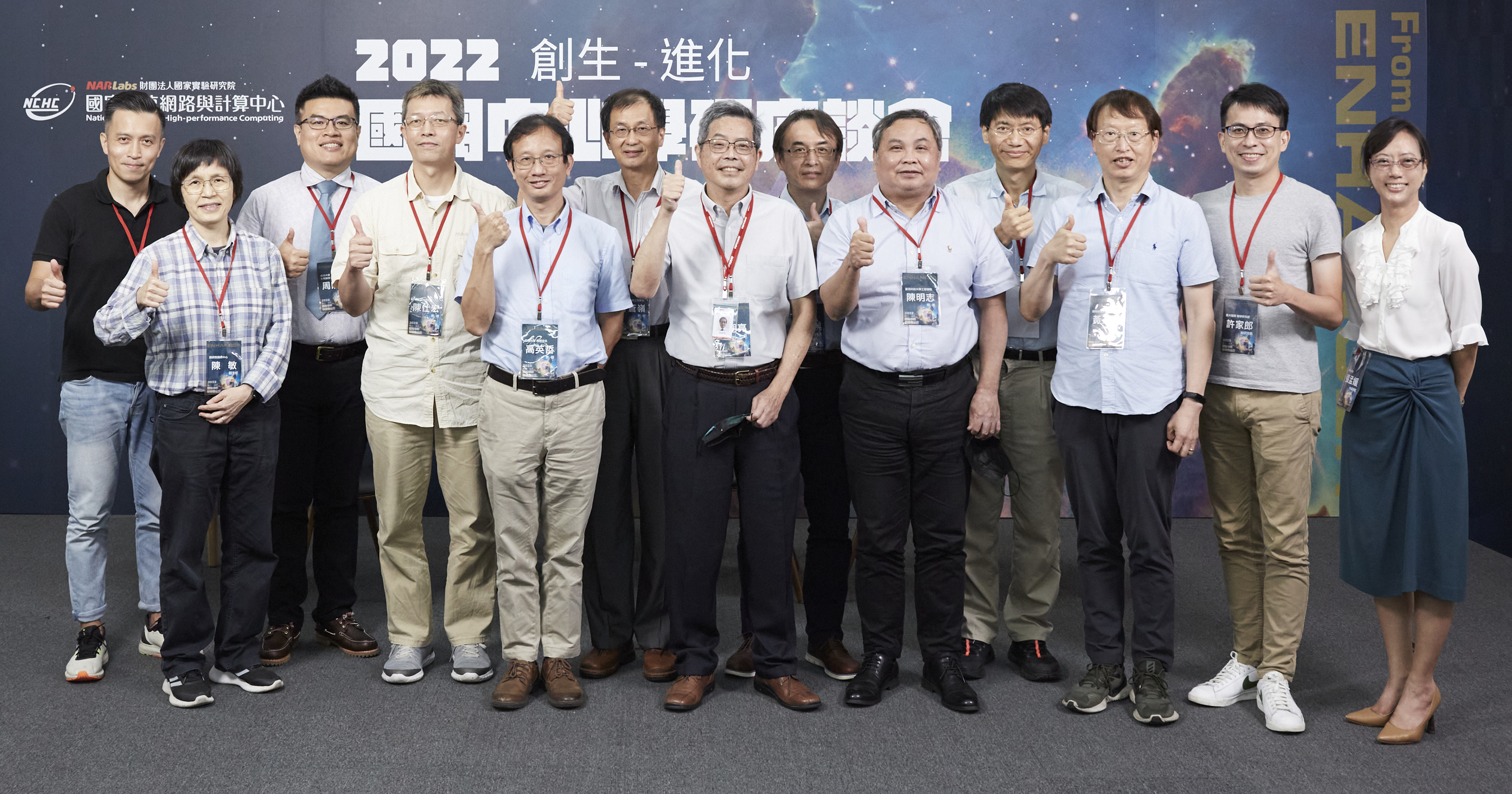
▲Top row from the left was Tsang-Ling Sheu, Professor from Department of Electrical Engineering, National Sun Yat-sen University, Shih-hung Chen, Professor from Department of Physics, National Central University, and Dean Chou, Assistant Professor from Department of Biomedical Engineering, National Cheng Kung University. The lower row from the left was Chia-lang Hsu, Associate Researcher from Department of Medical Research of National Taiwan University Hospital, Ying-Jer Kao, Professor from Department of Physics, National Taiwan University, and Ming-Jyn Chern, Dean of College of Engineering, National Taiwan University of Science and Technology. Their experience with high-speed computing was shared after the symposium.
User experience sharing by academic teams to show multiple implementation patterns of high-speed computing
Six experts and scholars from academic and research circles also shared their experience of cooperation with National Center for High-performance Computing from multiple fields at the symposium and witnessed the impact of high-speed computing services of National Center for High-performance Computing on academic research.
Tsang-Ling Sheu, Professor from Department of Electrical Engineering, National Sun Yat-sen University shared three experimental projects, namely intelligent monitoring, AIoT and unmanned aerial vehicle coastal automatic cruise, in which the 5G Smart Campus of Sun Yat-sen University cooperated with National Center for High-performance Computing. In the future, intelligent predictions would be made in conjunction with the NCHC Cloud Data Center to deepen the technical cooperation between 5G+MEC and big data analysis.
As a plasma expert, Shih-hung Chen, Professor from Department of Physics, National Central University, noted that plasma is basically a highly nonlinear and highly relativistic system, and it is not easy to make analyses by theory or system. Therefore, high-speed computer simulation plays an important role in plasma research.
Dean Chou, Assistant Professor from Department of Biomedical Engineering, National Cheng Kung University, from the perspective of biomedical mechanics, shared that after the cooperation with National Center for High-performance Computing, the computing time of the model was greatly reduced from the past three to four months to about one day through parallel computing.
Chia-lang Hsu, Associate Researcher from Department of Medical Research of National Taiwan University Hospital, shared that he would join the NCHC Nebula Faculty for collaboration in tumor genomics research in the future. Now facing an era of precision medicine, personalized medical analysis requires high-speed computing resources to help accelerate diagnoses and predictions.
As a member of the quantum national team, Ying-Jer Kao, Professor from Department of Physics, National Taiwan University, shared that high-speed computing is crucial to the development of quantum devices and algorithms. Quantum circuit simulator is a rapidly developing and highly competitive field, so National Center for High-performance Computing plays an important role in the development of quantum computers.
Lastly, Ming-Jyn Chern, Dean of College of Engineering, National Taiwan University of Science and Technology, shared his experience of using Taiwania 3 supercomputer to perform dynamic stall research. Due to the Large Eddy Simulation (LES) method used in the laboratory, a fine grid must be used to capture the real turbulent physical phenomenon, which was highly dependent on the HPC equipment of National Center for High-performance Computing.
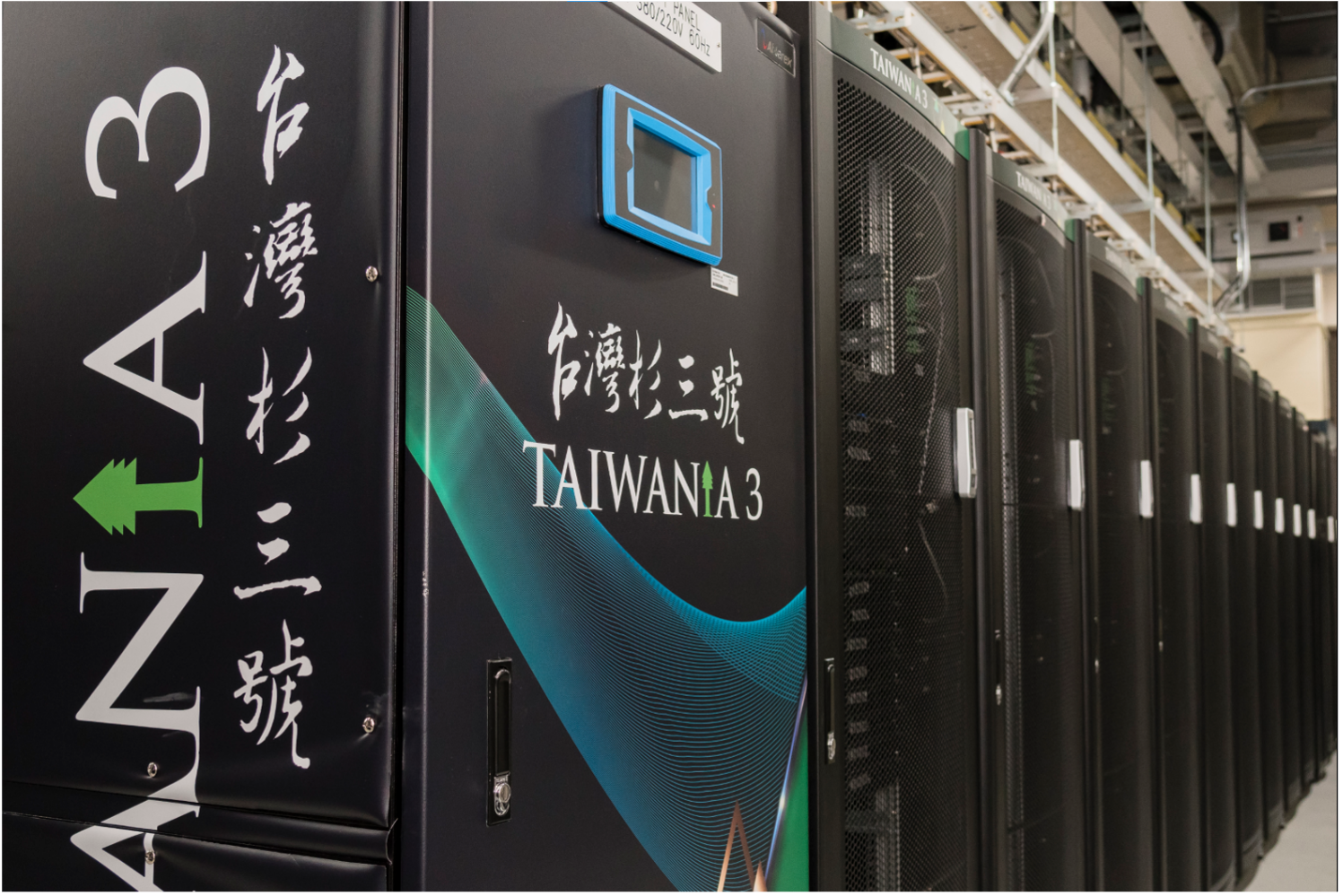
▲Taiwania 3, located in the Taichung branch of National Center for High-performance Computing, is the latest high-speed computing host that develops a new generation of Peta-level computing energy. With 900 computing nodes and 54,000 computing cores, it can provide computing services in multiple fields.
Academic teams were invited to join NCHC Nebula Faculty to create an HPC ecosystem
Chau-Lyan Chang, Director General of National Center for High-performance Computing, explained that National Center for High-performance Computing hopes to provide positive energy for the future development of science and technology in Taiwan. Therefore, according to the past experience of academic cooperation with NASA, the first NCHC Nebula Faculty program was put forward this year, calling on academic teams to cooperate with National Center for High-performance Computing to develop forward-looking technology. Fang-pang Lin, Deputy Director General of National Center for High-performance Computing, said that "For machines to be powerful, talent is the core value". NCHC Nebula Faculty hopes to make the role of National Center for High-performance Computing transfer from innovation to evolution, in order to build an ecosystem of outstanding R&D talents. It is a pilot program this year, and it will be expanded in 2023. Welcome the academic teams from Taiwan to join NCHC Nebula Faculty, so that HPC services could create higher added value.
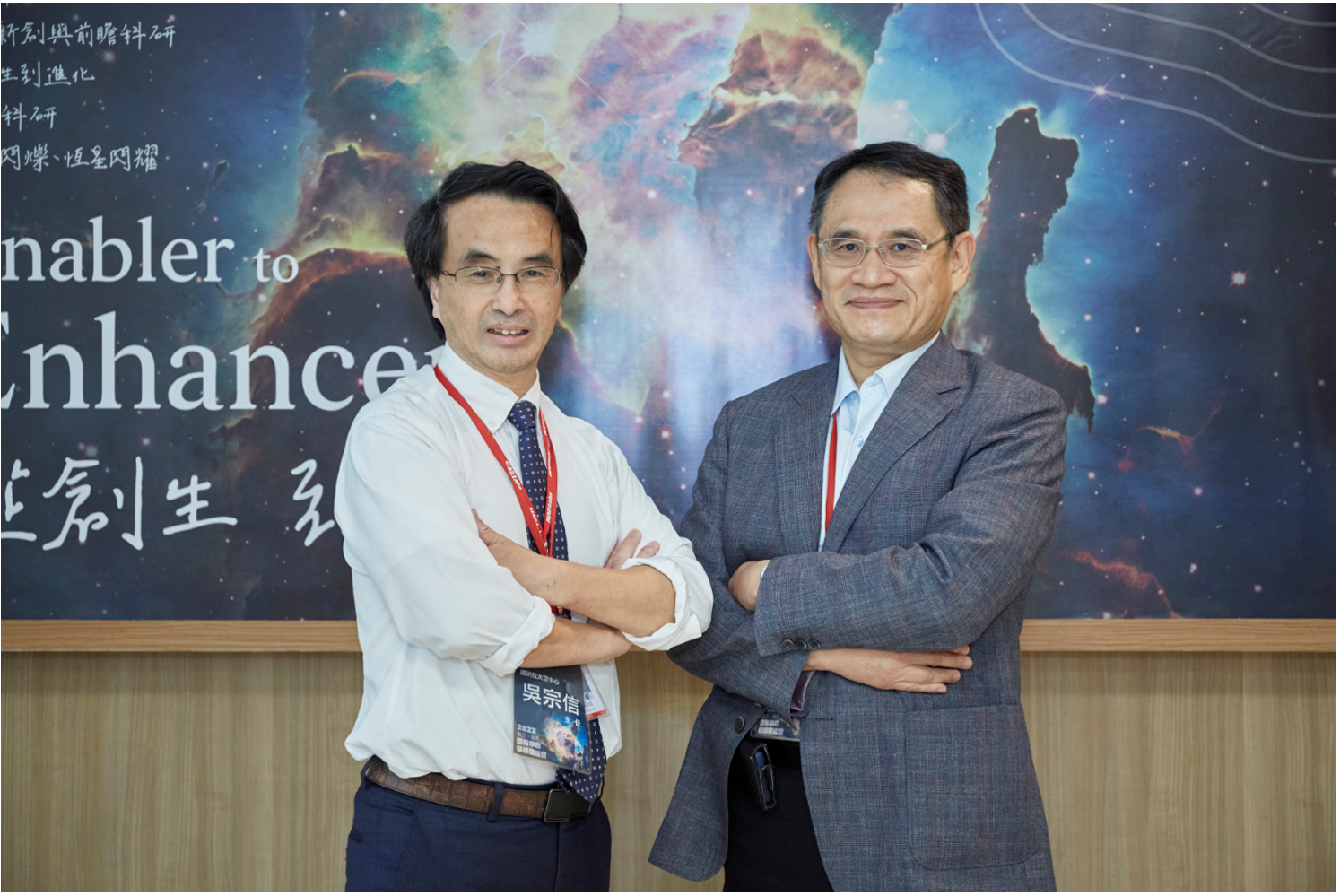
▲Jong-Shinn Wu, Director General of National Space Organization, and Faa-Jeng Lin, Chairperson of National Applied Research Laboratories warmly expected that National Center for High-performance Computing would have more technical close cooperation with academic circles and industries through its pioneering NCHC Nebula Faculty in the future.