 國家高速網路與計算中心
In 2019 Taiwan Healthcare Expo, NARLabs' technological prowess helped industries innovate
Publicsh Date:2019.12.05
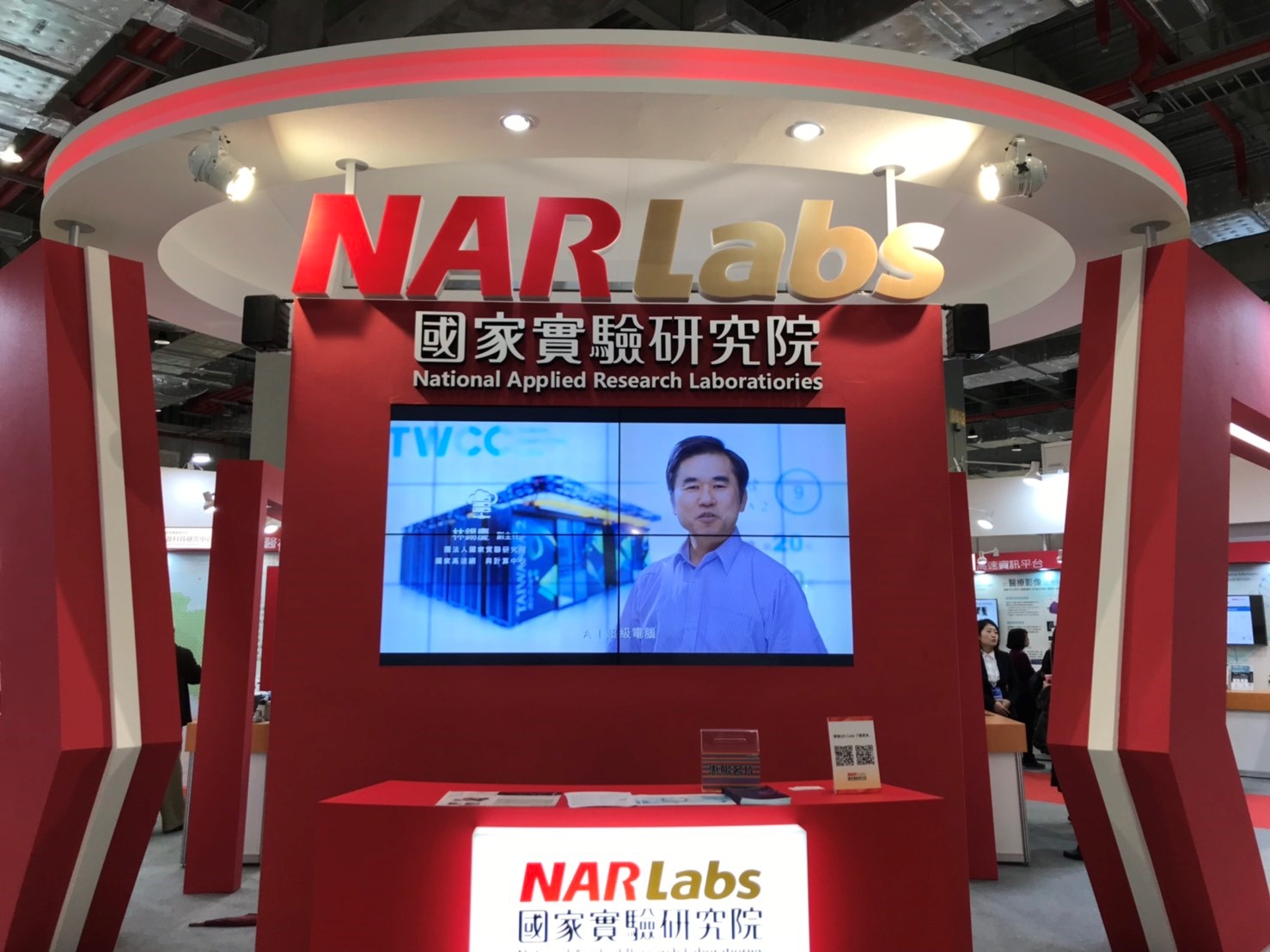
The booth of the NARLabs.
The NARLabs and its constituent labs that have played vital roles in the biomedical industry in Taiwan, including the National Center for High-performance Computing (NCHC), Taiwan Instrument Research Institute (TIRI), National Laboratory Animal Center (NLAC), Taiwan Semiconductor Research Institute (TSRI), and the Science & Technology Policy Research and Information Center (STPI), jointly hosted an exhibit of the fruits of their scientific research in medical care. In support of the efforts in Taiwan to advance the development of biotechnology and in the hope of attracting foreign investments and R&D, NARLabs hosted its third AI Biomedical Salon at the Expo and invited biomedical experts to talk about the state of the art and what's to come in their respective area of specialization. The theme of the salon was “Building a Biomedical Industry Ecosystem, Promoting Transnational R&D Centers, and Investing in Jobs in Taiwan.”
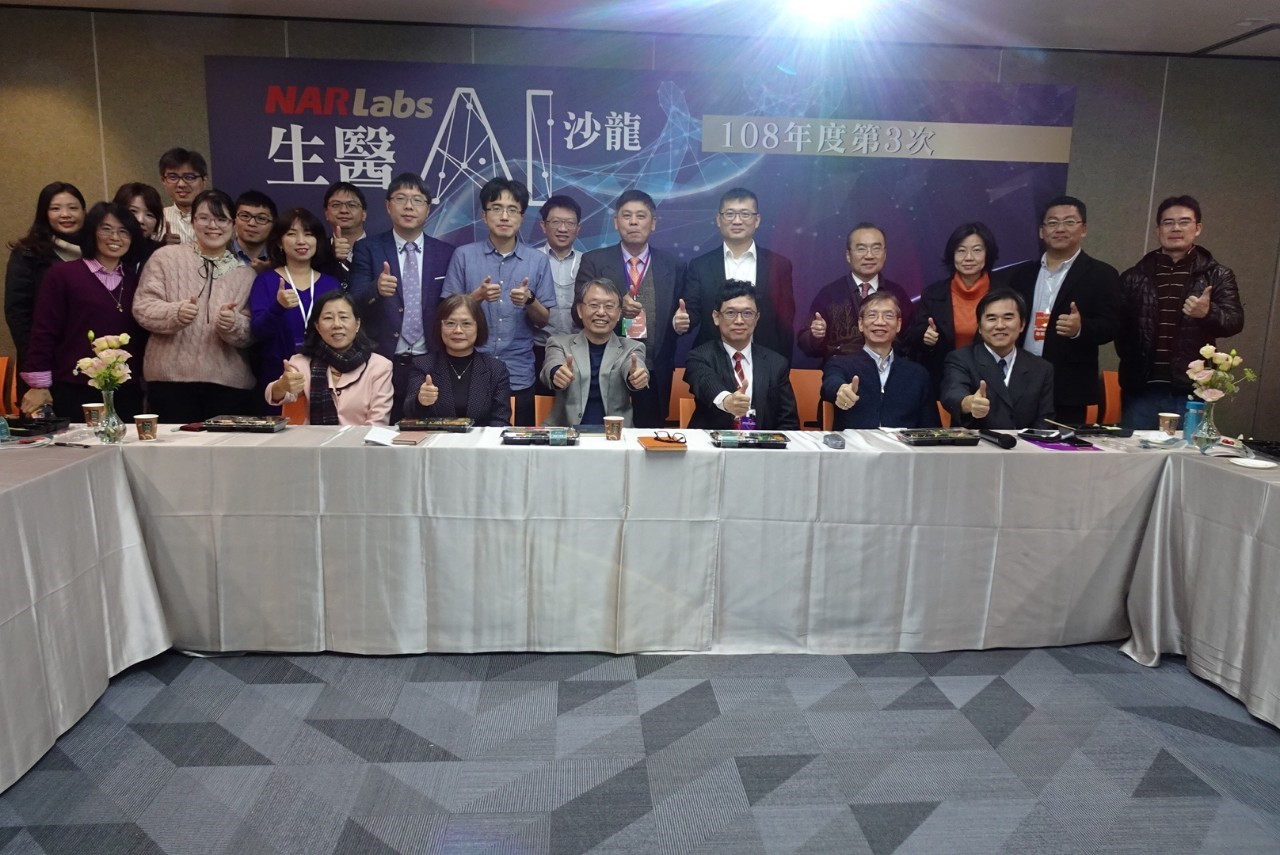
All participants of the third AI Biomedical Salon
In this Expo, the NCHC exhibited mainly in two areas.
1. Pathological image cloud service:
Using the GPU's high-performance computational service on TWCC, the instant marking of high-resolution images, and AI deep-learning applications, the service can quickly train the system on serious illnesses and apply it to real medical cases. Furthermore, NCHC has used TWCC resources to build a “Smart Medical Model Building Platform”, which lowers the bar for medical personnel to enter AI applications, integrating various medical databases and software techniques developed in the past. Currently academic, research, and industrial organizations may apply to use it.
2. Life Science Informatics ON-cloud Services (LIONS):
In terms of data integration, LIONS is connected to frequently-used biomedical database API to provide a single-entry platform that allows researchers to simultaneously query multiple databases. Users may define storage authority when they use the data, and they may use more intuitive ways to integrate with the system. For example, users may directly click organs or tissues on human body scenography as filters in data selection. In terms of applications, NCHC provides frequently-used basic models for users to select, which helps users train the model and adjust parameters for optimization. The goal of all this is to allow users to use one key to automatically build a model and periodically upgrade the core AI engine.
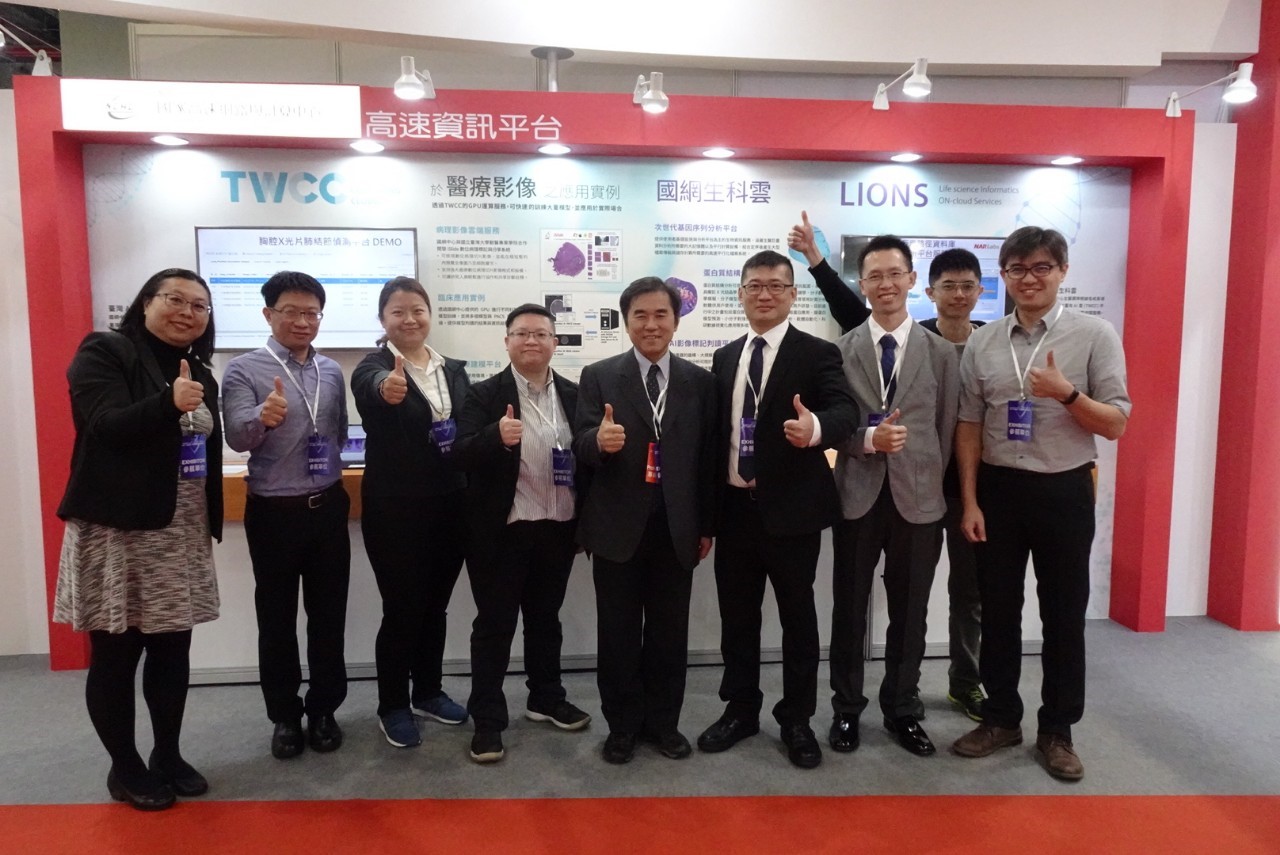
(left) The NCHC participants pose in the booth. (right) The NCHC research fellow introduces the biomedical platform.
NCHC uses huge computational hardware resources to provide analytical software for gene sequencing, huge memory on TWCC, parallel computation equipment, high-speed parallel file system to store and transmit large files, and off-site backup of sequencing data to reduce the difficulties for the biomedical industry to adopt AI. NCHC hopes that it can be a solid ally to stand behind the medical industry in Taiwan.
